.png)
Yes you can sell products on Carrd, let alone if it’s a digital product! However, there's no built-in cart, no product database, and no native checkout flow. What Carrd gives you is a fast, focused page and the ability to embed payment tools that handle the transaction side, which turns out to be enough for a specific and very common kind of selling.
Whether that's enough for your situation depends on what you're selling and how.
There's no Carrd store, but there doesn't need to be
The mental model most people arrive with is a traditional online store: browse a catalog, add items to a cart, check out. That's not what Carrd is built for. Trying to replicate it here is the wrong approach entirely.
What Carrd does well is present a single focused offer and move a visitor toward one clear decision. Buy this, or don't.
That model is more powerful than it sounds. Single-product pages consistently convert better than product listings inside larger stores, because nothing is competing for the visitor's attention. No similar items, no sale banners, no navigation pulling them elsewhere. Just the product, the reason to want it, and a button.
The tools that handle the actual transaction
Carrd doesn't process payments itself, but it embeds the tools that do, and the integrations are cleaner than most people expect.
Stripe Payment Links are the simplest entry point. You create a payment link inside Stripe (no code required), attach it to a button on your Carrd page, and you're done. The customer clicks, completes checkout on Stripe's hosted page, and you receive a notification. The whole setup takes under fifteen minutes the first time, and for a fixed-price product or service with no variations, it's genuinely hard to beat.
Gumroad is the stronger option for digital products specifically. Templates, ebooks, design assets, Notion dashboards, presets: Gumroad was built for this category, and its embed widget drops into Carrd cleanly. The checkout happens inline on the page rather than redirecting the buyer elsewhere, which reduces friction and tends to improve completion rates. Gumroad also handles digital file delivery, VAT compliance for EU customers, and basic affiliate functionality, covering operational overhead that Stripe Payment Links don't touch.
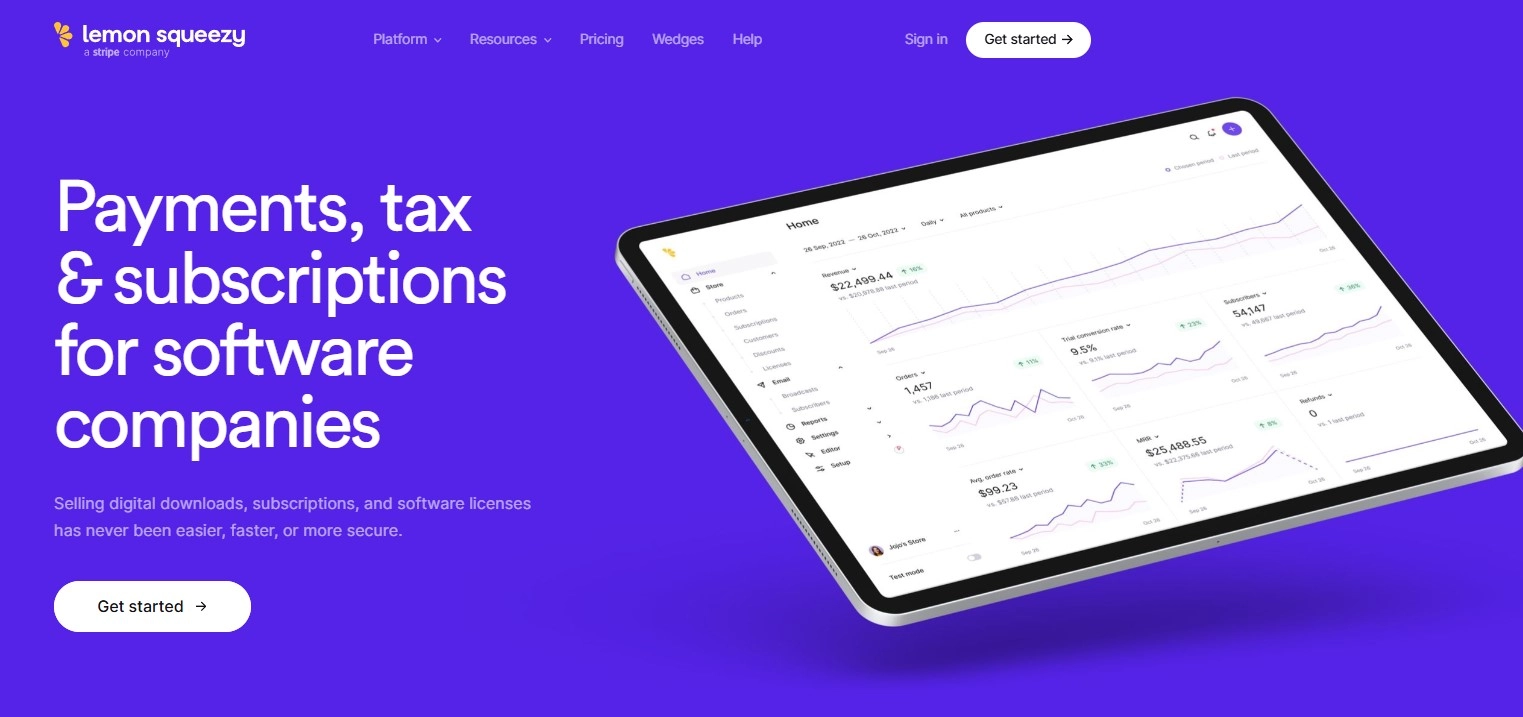
LemonSqueezy is worth knowing as a Gumroad alternative, particularly for software or anything requiring license key delivery. It manages tax compliance across multiple jurisdictions automatically, which becomes important faster than most creators anticipate.
PayPal buttons still work, embed without friction, and remain the right choice wherever PayPal trust and usage is high in your target audience.
What Carrd sells well and where it hits its limit
The categories where a Carrd product page genuinely performs are digital downloads, templates, standalone services with a fixed price, and single physical products with no variants. If a visitor can see the offer, understand its value, and make a clean yes-or-no decision, Carrd handles it well.
The categories where Carrd reaches its ceiling quickly are physical products with size or color variants, anything requiring inventory management, subscriptions with layered billing logic, and multi-product catalogs where browsing is part of the buying experience. These aren't flaws in Carrd. They're simply outside the scope of what a focused landing page builder was designed to manage. A three-product digital shop is fine. One growing toward fifteen or twenty is probably approaching the point where a proper e-commerce platform earns its added complexity.
Why "one offer" is a strategy, not a limitation
Designers and creators sometimes feel the urge to list everything they've made on a single Carrd page and treat it as a storefront. This usually works against them.
Each additional product dilutes attention. Decision fatigue sets in. The likelihood that a visitor commits to anything drops. The more effective approach is building one focused Carrd page per product, each one written and structured around a single purchase decision. This is particularly natural for digital products, where each item can have its own headline, its own visual, and its own specific argument for why someone should buy it today.
If you're ready to start building a product page and want a visual foundation that's already set up for a focused single-offer layout, the carrd templates we have at onepagetips.com/#templates are worth a look before you open a blank Carrd canvas. And if you're deciding between Gumroad and Stripe for something specific, leave the details in the comments.